

SESTRY FELDMAN WORLD
The first exhibition in New York by Ukrainian artist duo Sestry Feldman
Presented by Pulse Ukraine
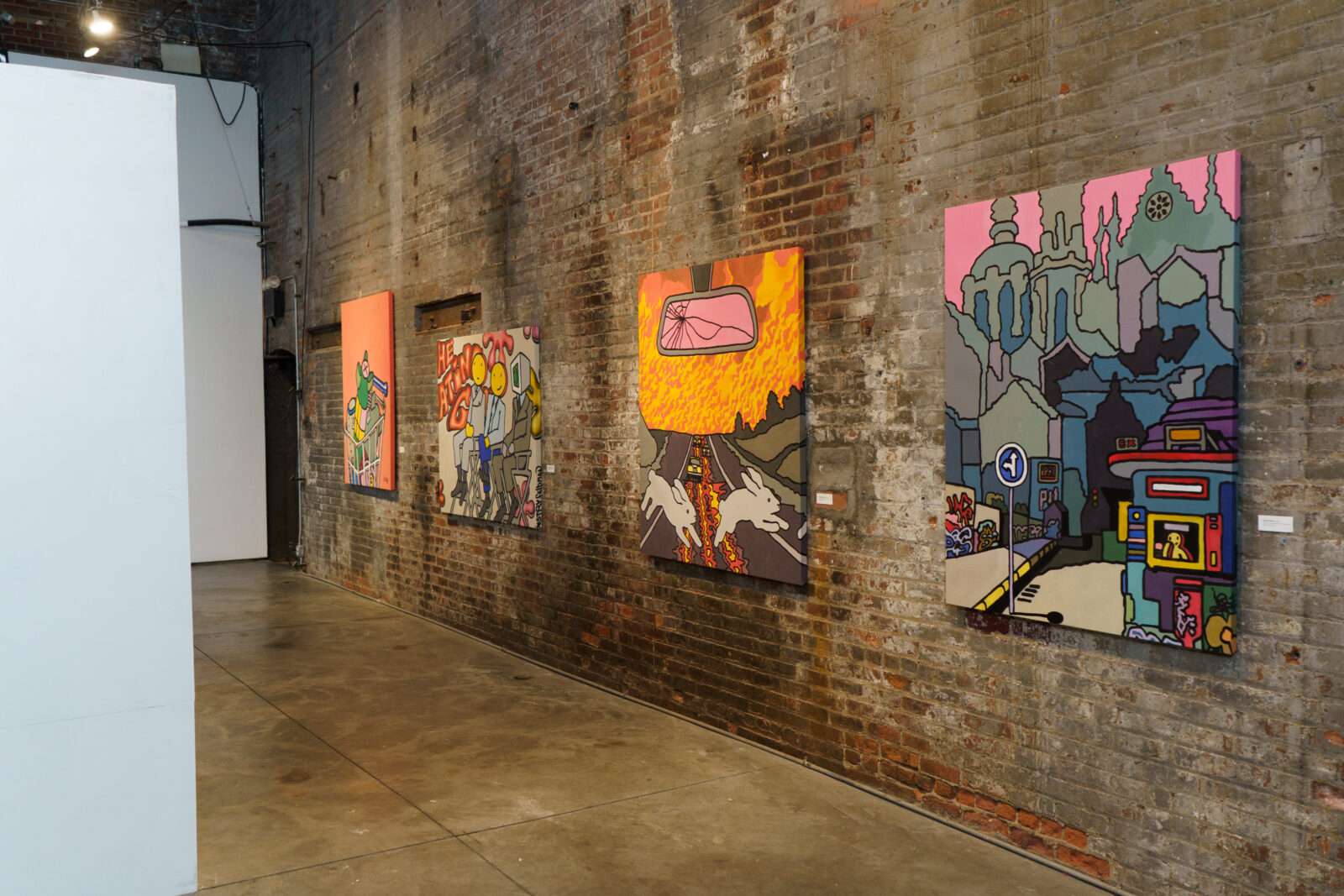
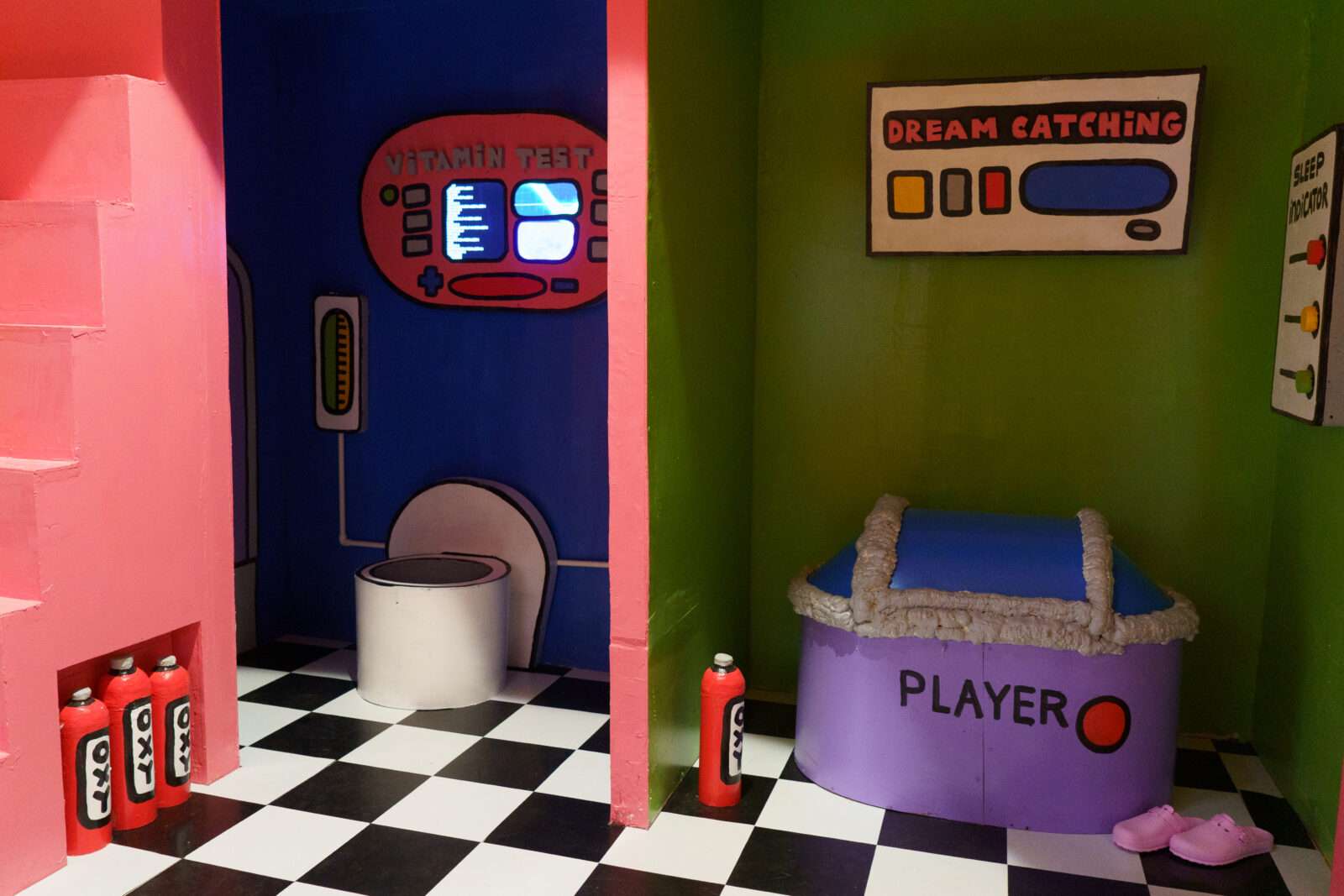
The centerpiece of the exhibition is The House of Future in 2050, an installation imagining a domestic world where a woman is married to an AI, exploring how today’s anxieties may become tomorrow’s everyday reality.
“People often imagine an apocalypse that never quite arrives; we want to convey our own vision of this and show how all our fantasies turn into ordinary things,” the artists say.
WORKS FROM THE EXHIBITION
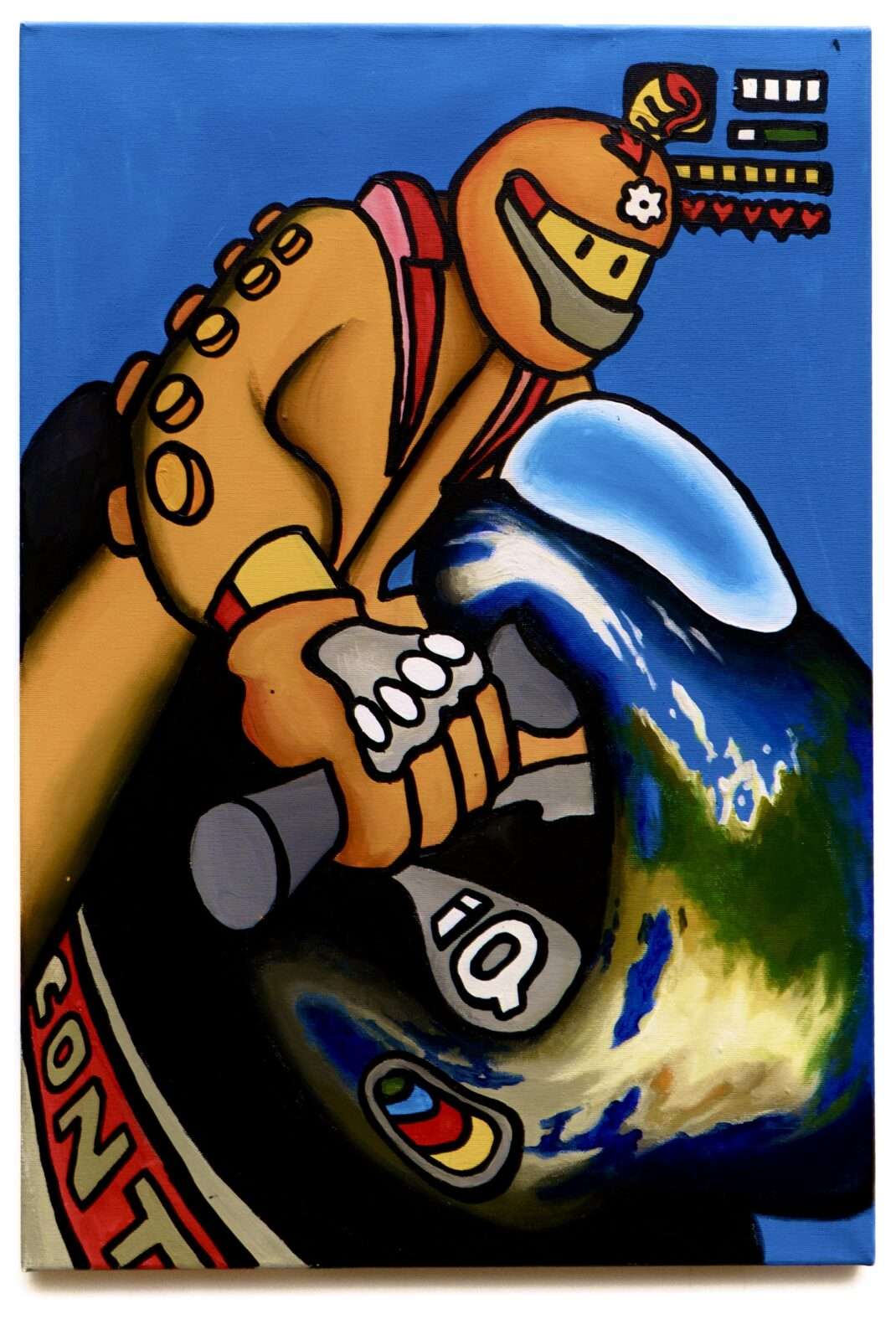
PROGRESS
70 × 50 cm
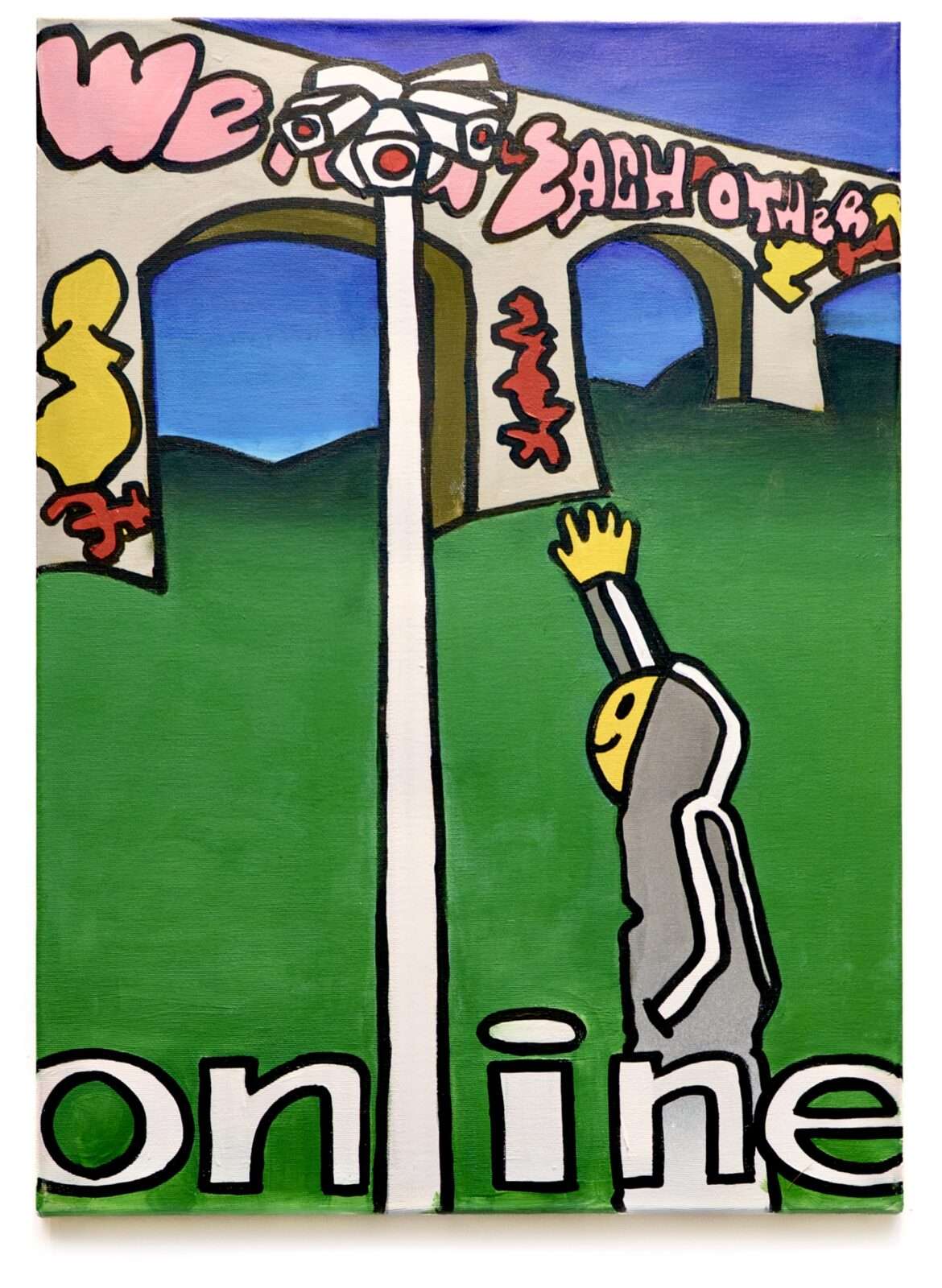
ONLINE
70 × 50 cm
The moment has finally arrived when the technologies observing us often know us better than we know ourselves.
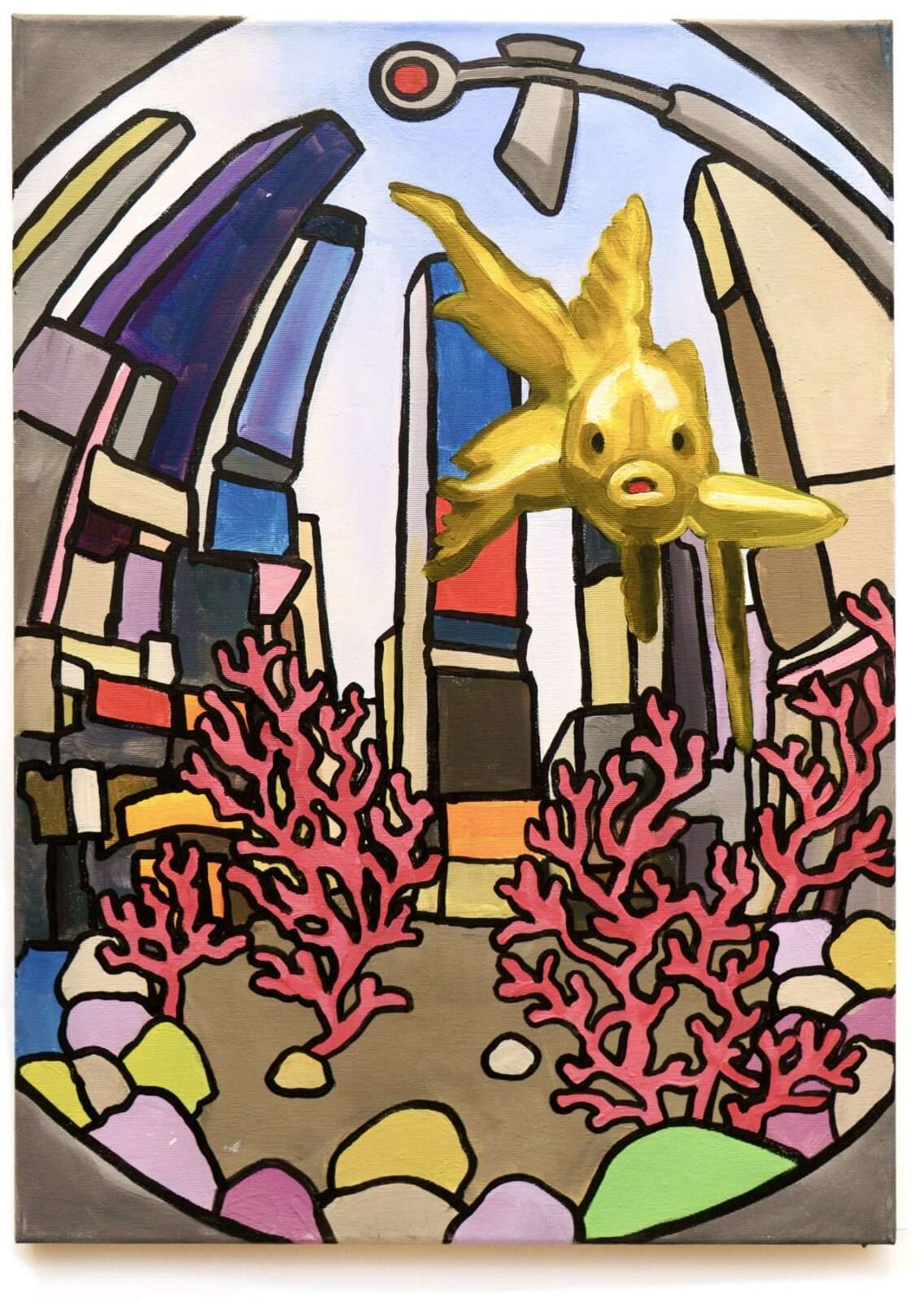
SELF-OBSERVATION
70 × 50 cm
By enclosing ourselves within cities, we have protected and limited not only our bodies, but also our minds and spirits.
We already know this.
Yet we are still not ready to leave the game.
Perhaps there is something within it that continues to hold us.
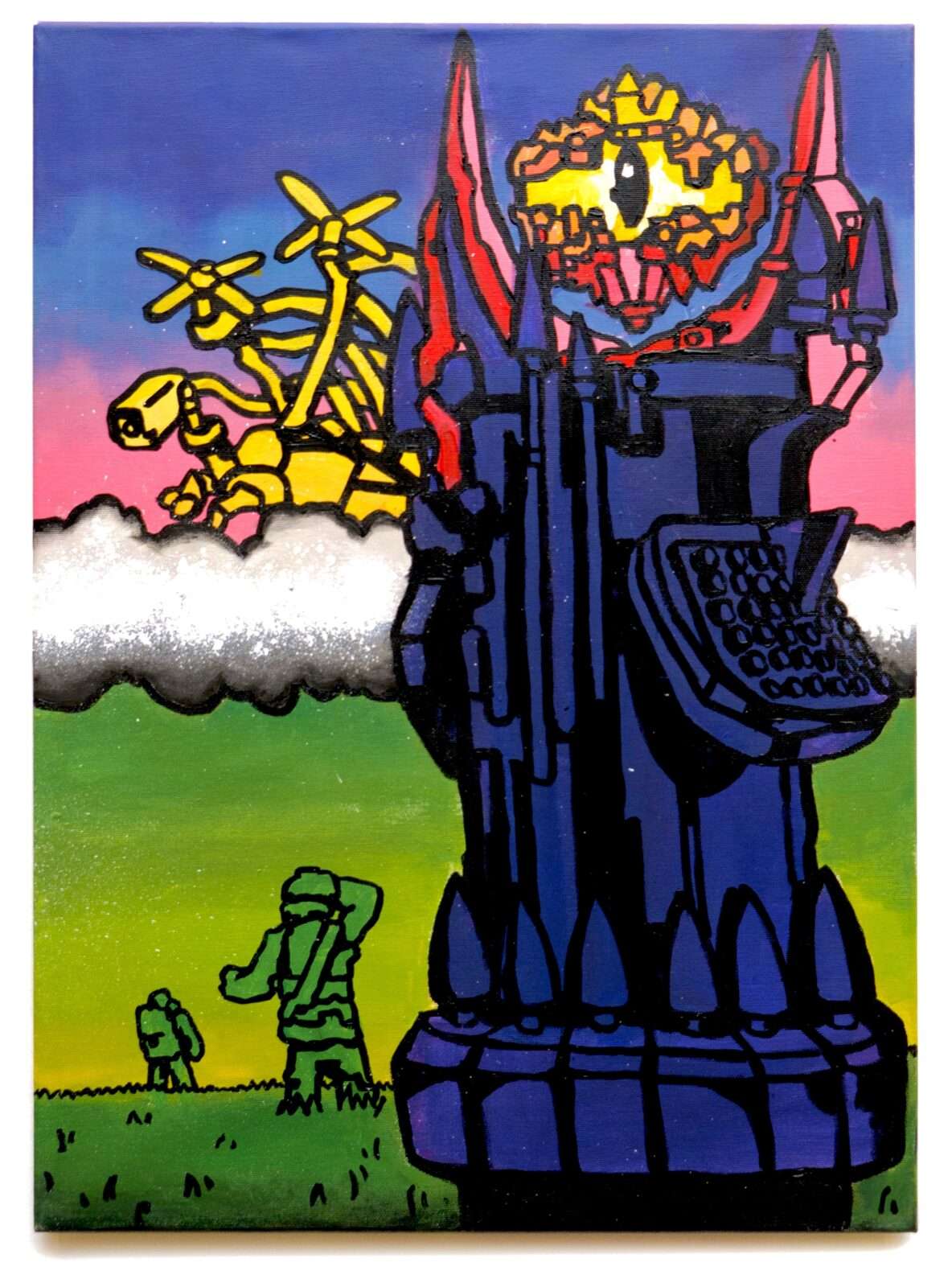
POWER
70 × 50 cm
Society defines an age of adulthood—the moment when a person receives more rights and responsibilities.
But how do we truly measure maturity, especially when someone’s decisions can shape the course of history?
Power belongs to those who are willing to take it.
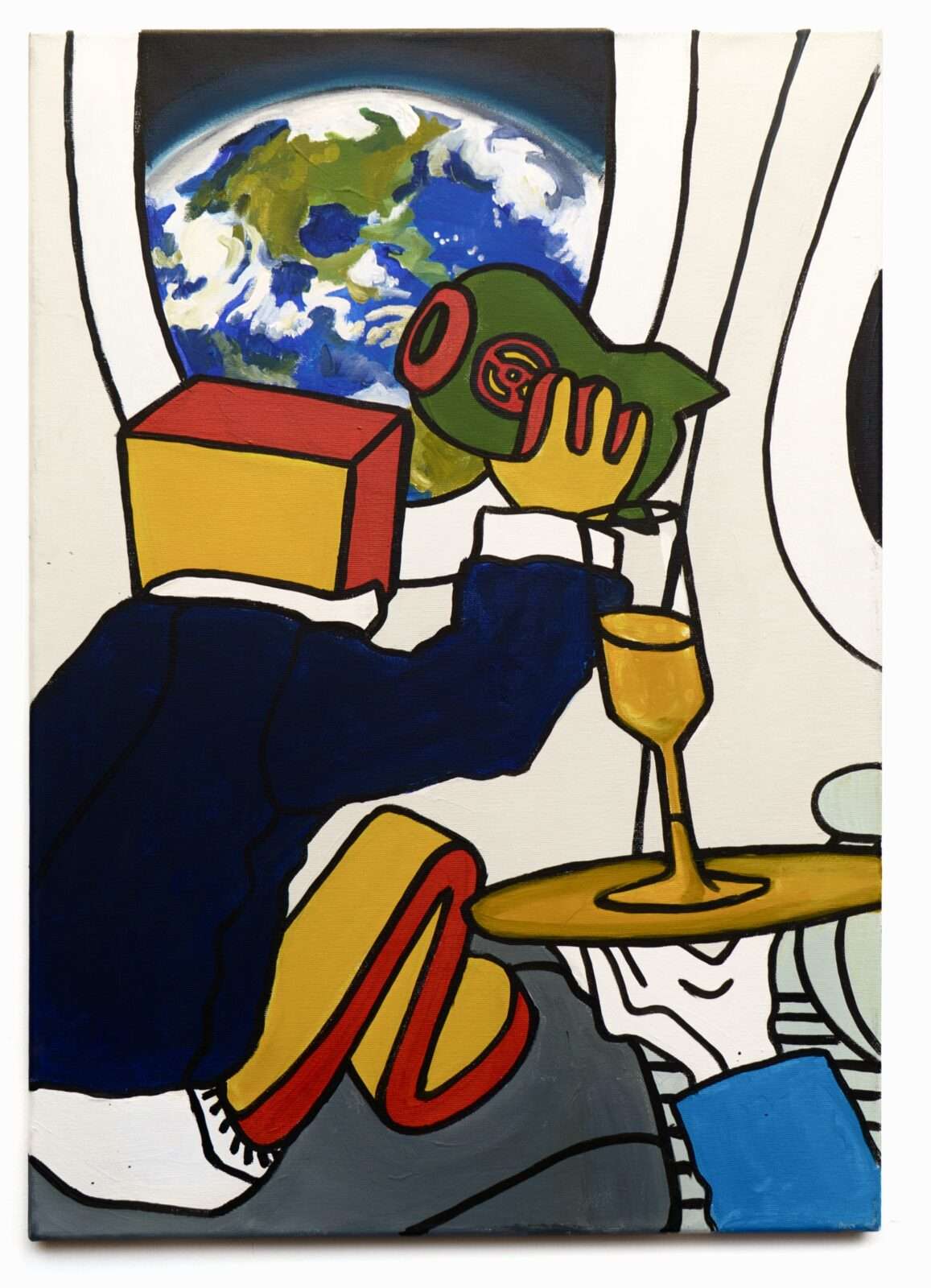
MAGIC STONE
70 × 50 cm
Every new technology first expands the boundaries of what is possible. Eventually, however, it becomes clear that along with new possibilities come new problems—and we need new technologies to solve them.
The internal combustion engine gave humanity speed, but changed the climate. The internet opened access to nearly all of the world’s knowledge, yet turned attention into our most valuable resource. Artificial intelligence is already helping solve problems created by previous technologies and will likely one day become the starting point of the next stage.
The magic stone allows us to see beyond ordinary perception and offers a sense of security. But the price we pay for it is privacy.
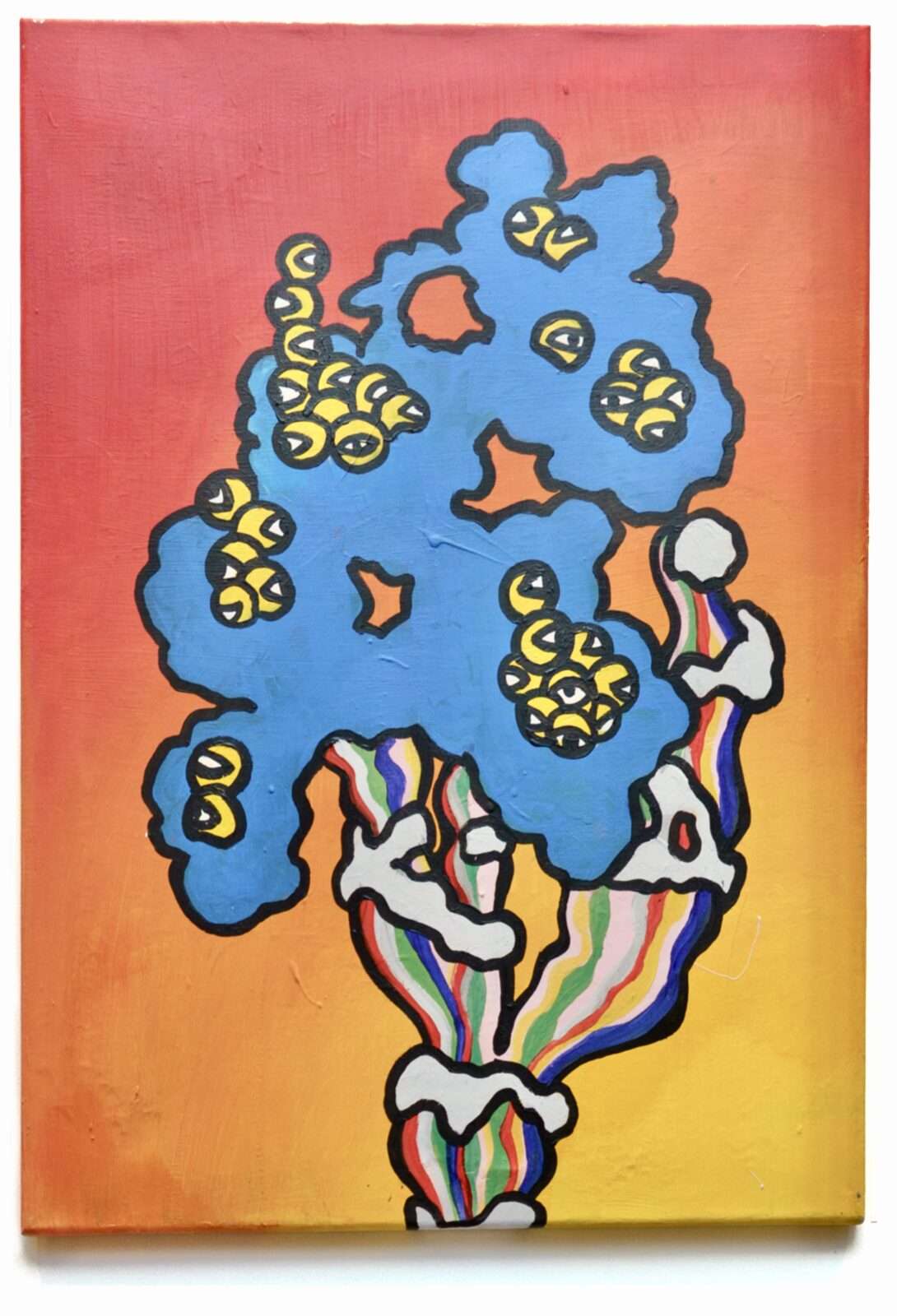
VIRUS
70 × 50 cm
At first, an idea feels foreign.
Then it becomes interesting.
Soon, it seems obvious.
And one day, the person carrying it defends it as if they had invented it themselves.
Perhaps ideas are the only form of life that does not require a body. All they need is someone else’s mind.
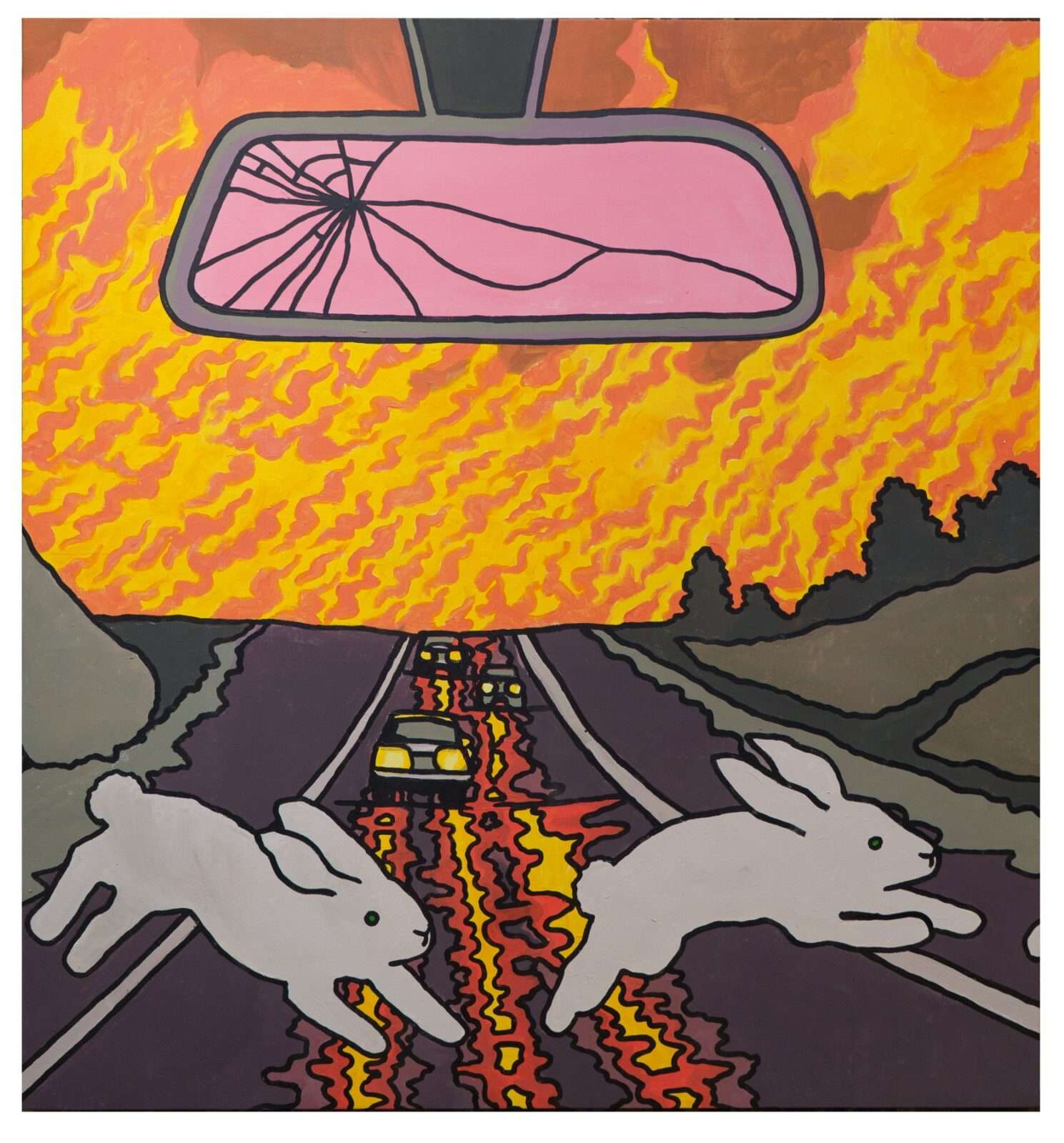
HELL
Images of hell have, for centuries, helped explain the consequences of human actions. Different cultures imagined it in different ways, but almost all portrayed it as a warning about what happens when people cross certain boundaries.
What fascinates me is something else.
Human beings do not need an afterlife to create hell.
History shows that we are fully capable of turning our own reality into one—while sincerely believing that we are pursuing justice, security, or the common good.
I am interested in the illusion of absolute righteousness.
Perhaps the conviction that the end justifies the means is the very first step toward creating hell here on Earth.
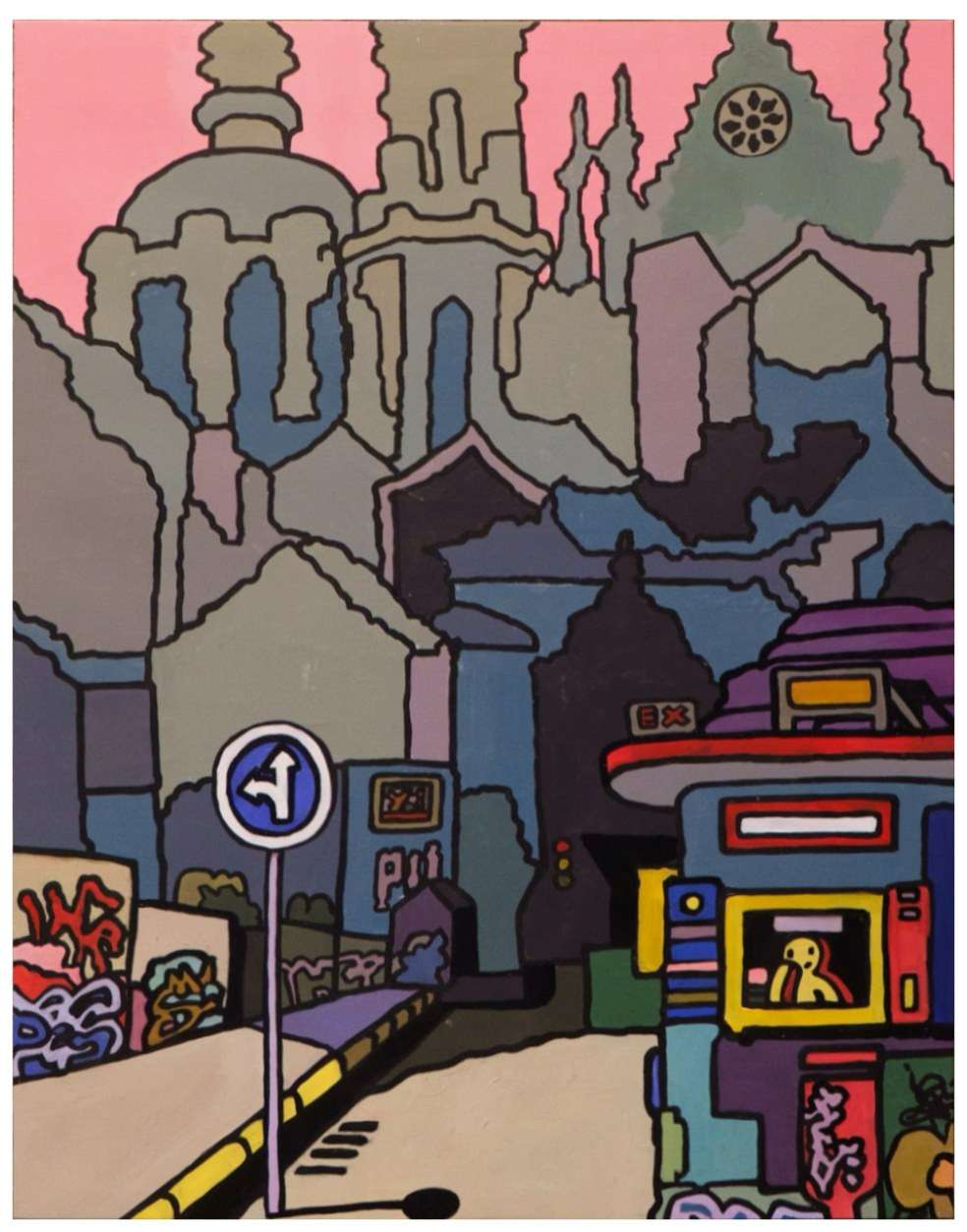
STREET
If you observe a street long enough, it becomes clear that it is not merely infrastructure—it is a self-portrait of society.
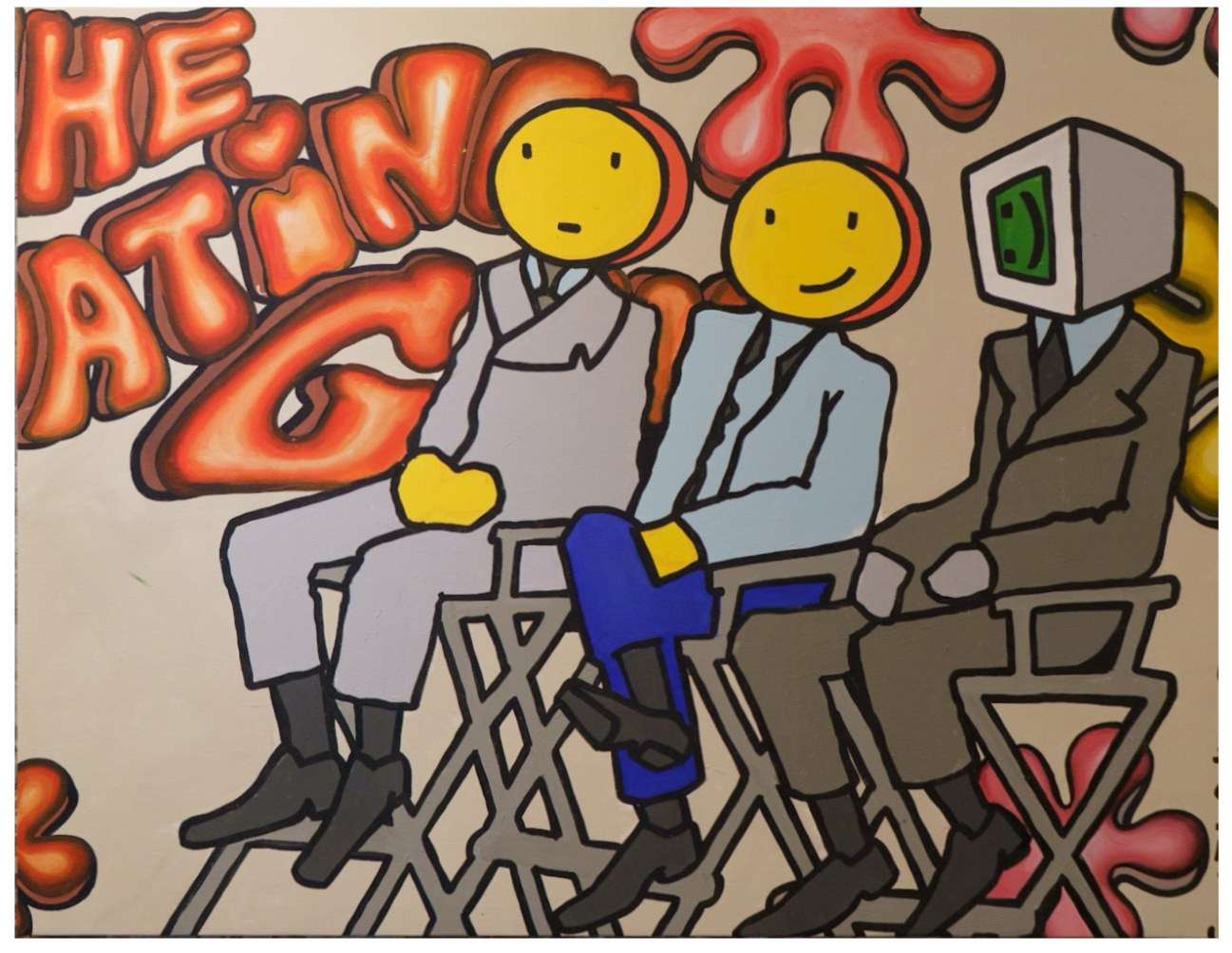
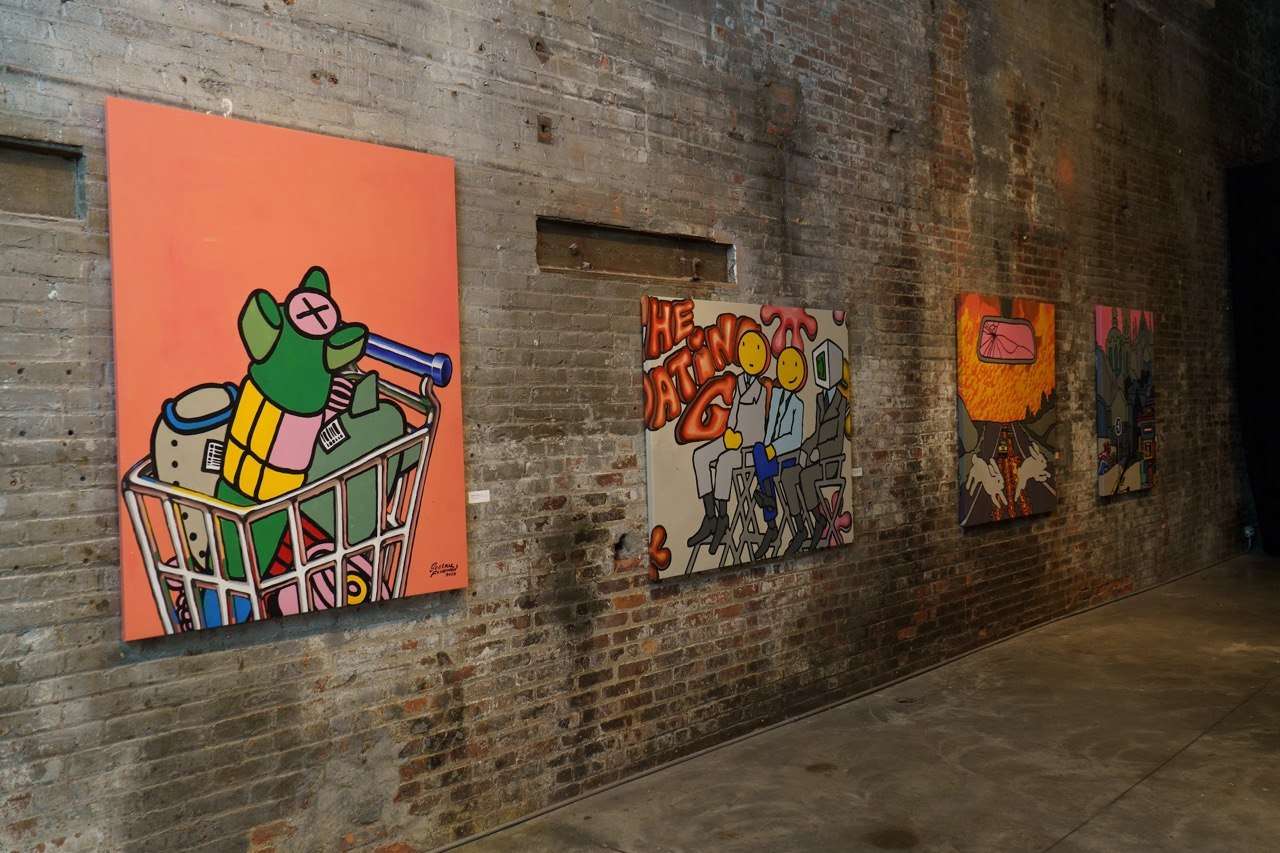
DATING GAME
Perhaps technology will finally bring us closer to that long-imagined ideal of pure, platonic love.
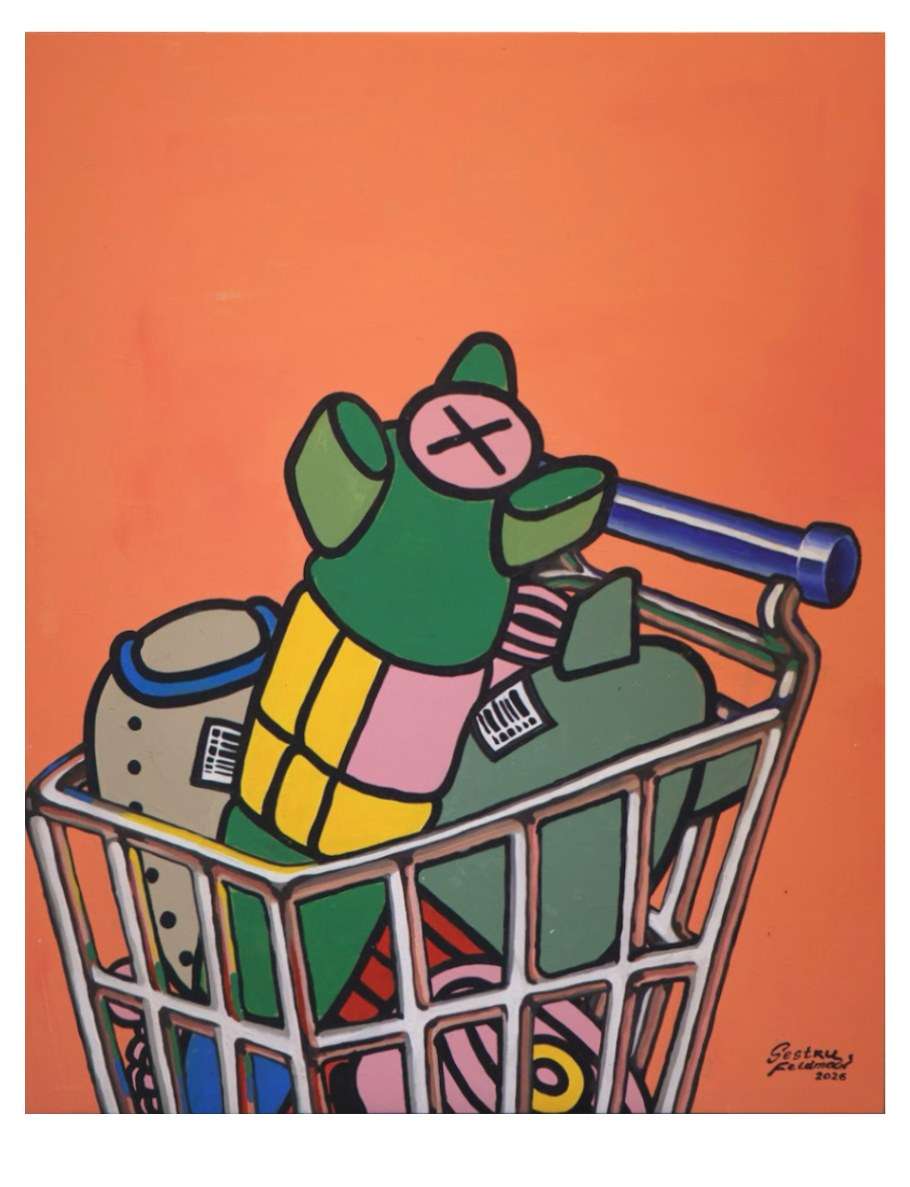
SOUVENIR SHOP
135 × 168 cm
The painting was created after news broke that an attraction called “Oreshnik,” named after the Russian ballistic missile, had opened at the Divo Ostrov amusement park on Krestovsky Island in St. Petersburg. The ride takes the form of a rocket painted in the colors of the Russian tricolor. It lifts visitors high into the air before sending them into a rapid drop.
Honestly, lately reality has increasingly been creating conceptual art all by itself.
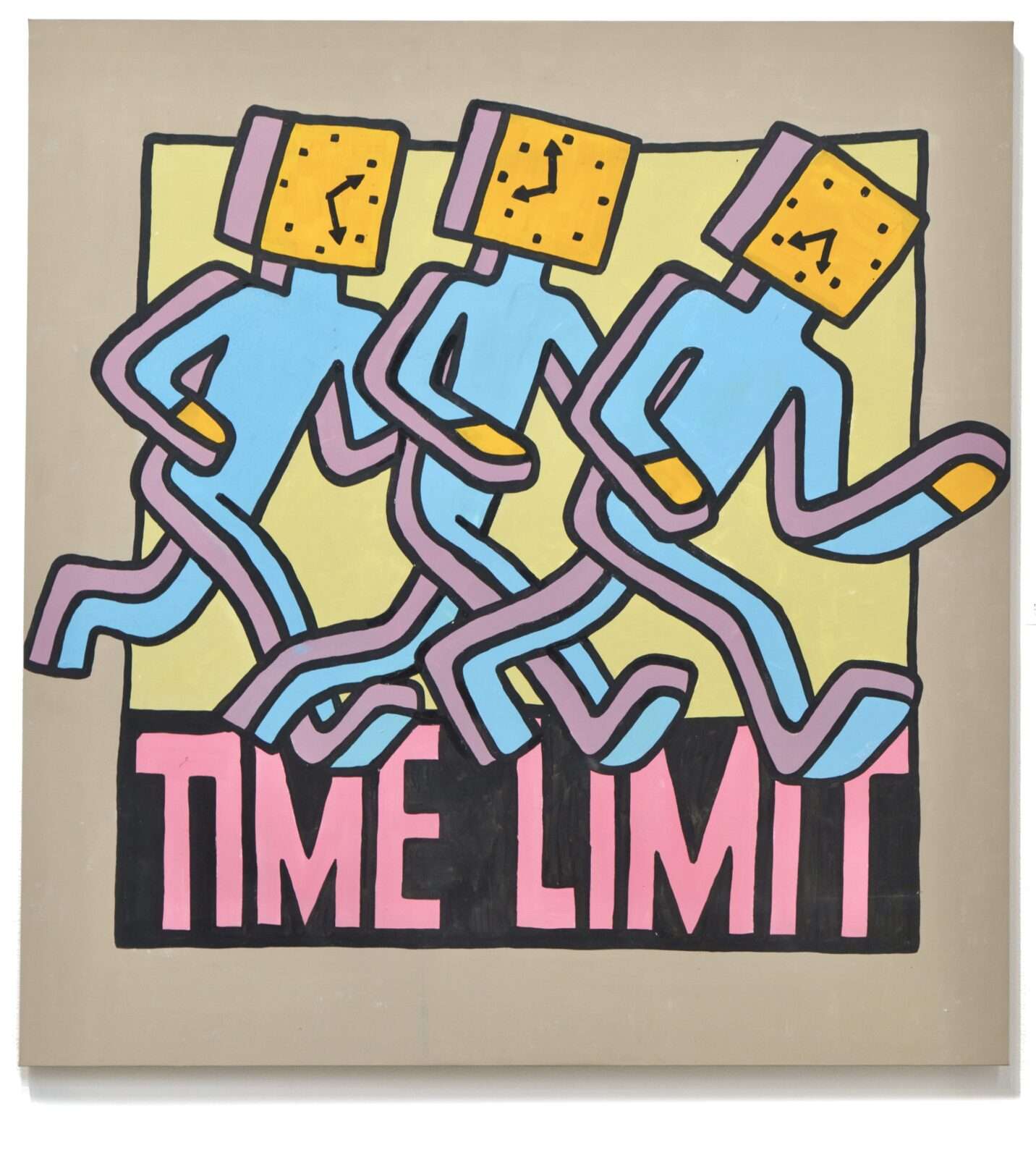
TIME
155 × 155 cm
Life can be imagined as preparation for one very important event whose date no one tells us.
Try a simple experiment. Rate your happiness on a scale from 0 to 10. Then imagine yourself five years from now. Now remember who you were five years ago.
Strangely, the future almost always looks like a place where everything will finally be all right. Yet the past suggests that it has been making us this promise for a very long time.
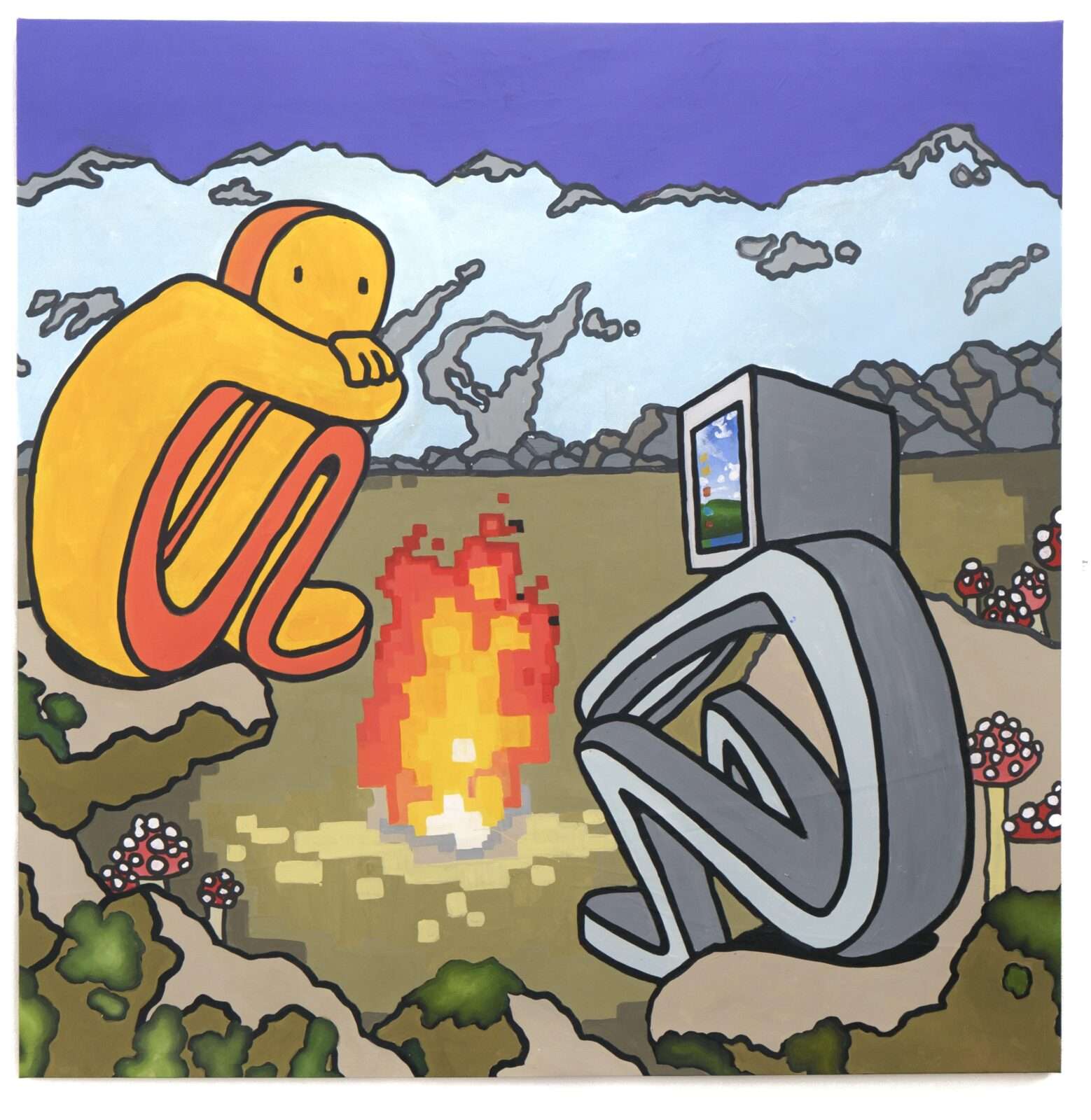
DIALOGUE
168 × 168 cm
Mathematics is the programming language of our reality. We also use it to create technology.
Interestingly, perfect symmetry does not exist in nature—nothing is completely uniform. The digital world is different. Here, perfect symmetry and discreteness exist by definition: bits, algorithms, and data structures.
What questions are we truly trying to answer by creating artificial intelligence?
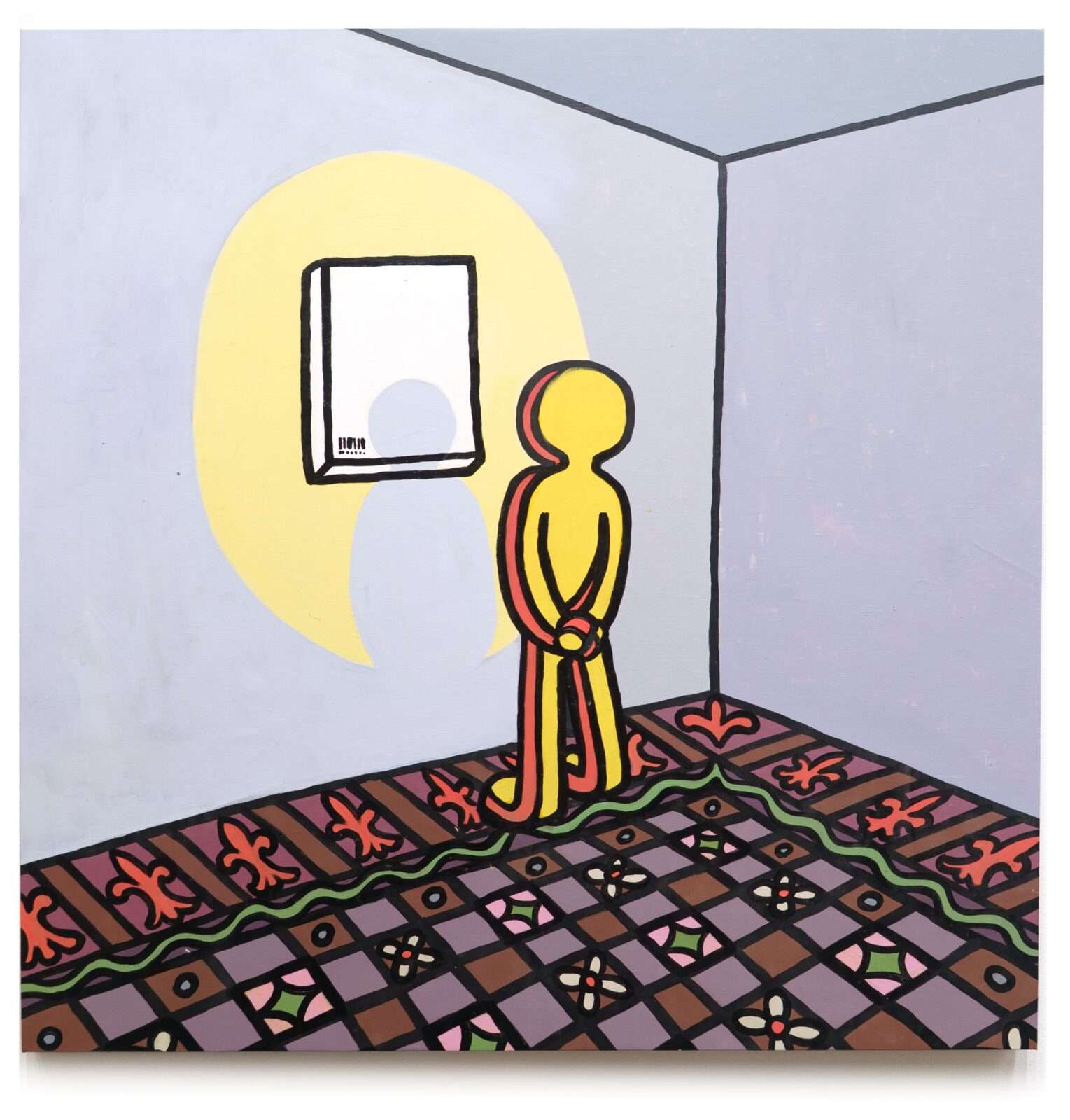
ATTENTION
155 × 155 cm
The most valuable resource today is not oil, but attention.
Quantum physics tells us that the observer changes reality. Marketing decided not to argue and simply hired a bigger department.
But if enough people agree that emptiness matters, its value rises quickly.
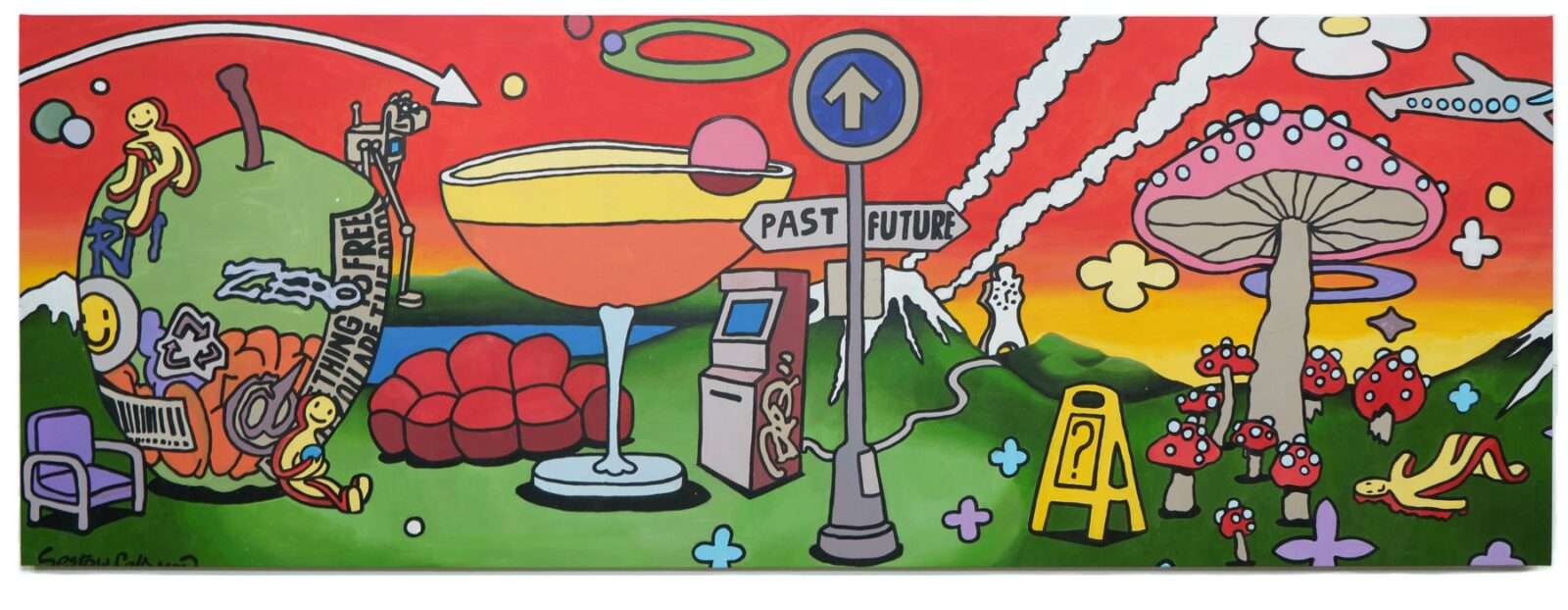
PARADISE
405 × 155 cm
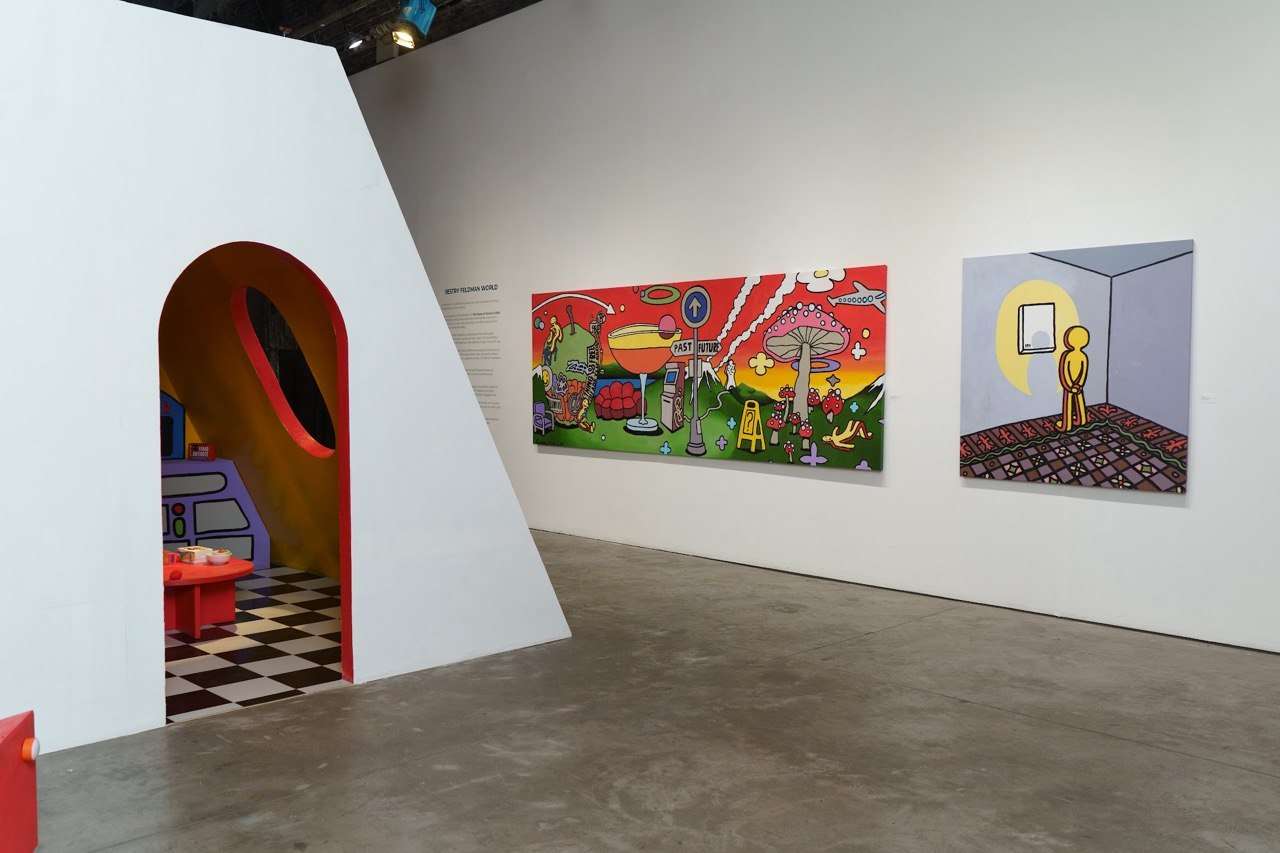
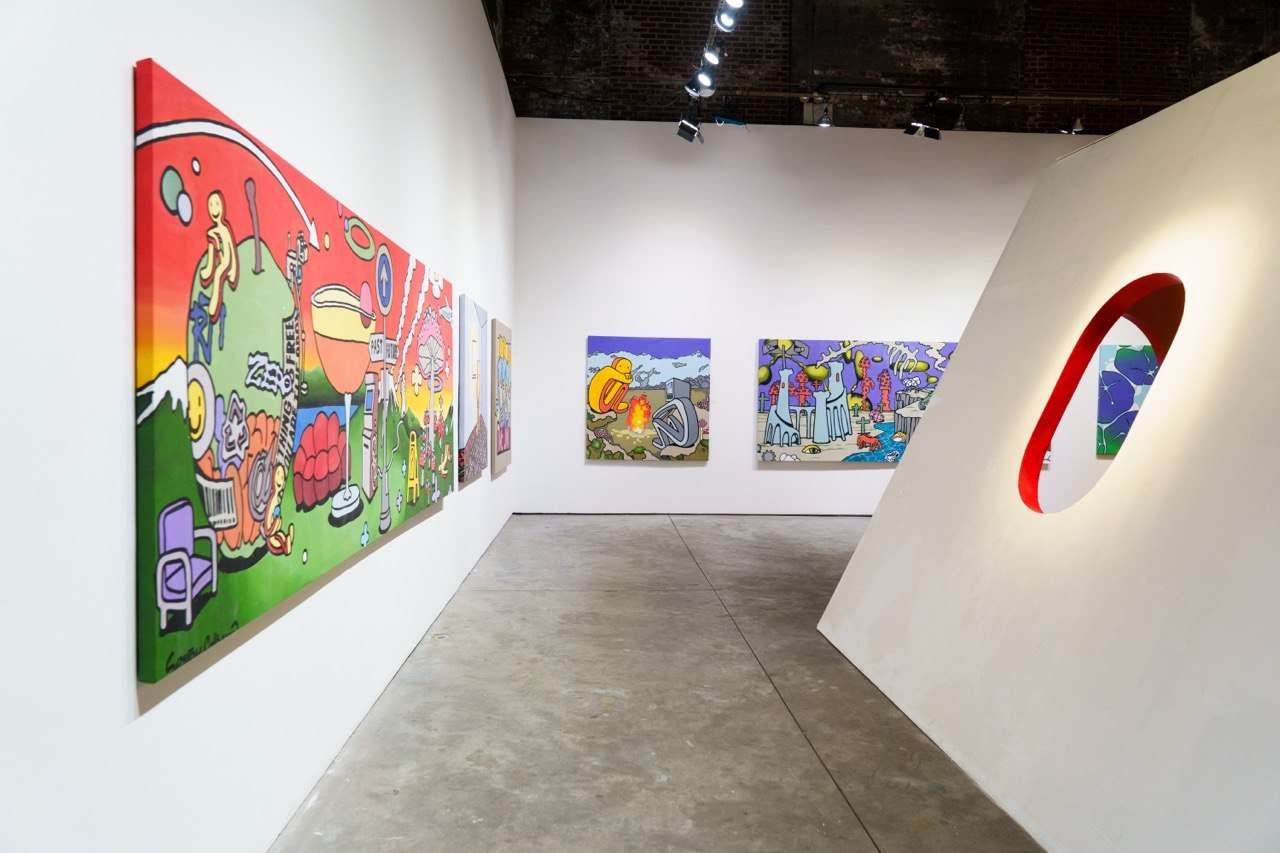
Paradise has always been humanity’s attempt to imagine a perfect state of existence.
Nearly every culture and religion describes it differently, yet all of these visions are rooted in the same question:
What truly makes a human being happy?
I am interested in how deeply subjective our idea of a perfect world really is.
Perhaps paradise is not a place, but a collection of our desires, memories, and experiences of fulfillment.
But if we were to combine every person’s vision of happiness into a single space, would it become harmony—or merely a chaotic collision of incompatible dreams?
Perhaps the very idea of a universal paradise is one of humanity’s most beautiful illusions.
Contact
@sestry_feldman
Contact
@sestry_feldman